
What if Intergenerational Collaboration Had a Playground?
We spend a lot of time talking about collaboration across generations. We ask people to communicate better. Trust one another. Think creatively. Ask for help. Consider different perspectives.
But where do adults actually practice those things — especially across a workforce that spans Boomers to Gen Z?
My friend Laura Khalil has an unusual answer: play.
I've known Laura for years—she helped me develop Generation IQ, and I've loved watching her turn a favorite pastime into something more. That pastime is tabletop role-playing, including Dungeons & Dragons.
I'll admit I was skeptical. Even with my background in theatre and improvisation, I couldn't figure out what I was supposed to gain from rolling dice and pretending to be somebody else.
Then I played.
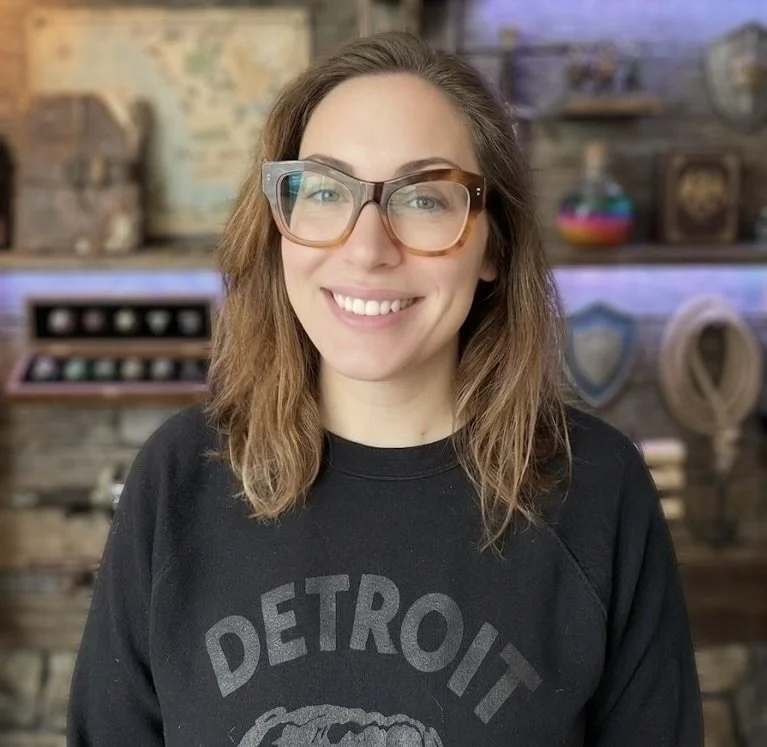
Laura brought together a virtual group of women who barely knew one another and dropped us into a made-up town as Miss Marple–type murder sleuths.
Before long, I wasn't thinking about the dice. I was inside the world we'd created. My choices affected what happened next. Other people's choices changed what was possible for me. We had to respond to one another, use different information, try things, make mistakes and live with the consequences.
Except the consequences weren't real.
That may have been part of the magic. We could take chances. Try another approach. Follow someone else's lead. Laugh—a lot—while figuring things out together.
In other words, collaboration had a playground. And perhaps intergenerational teams do, too.
D&D arrived in 1974, making Gen X the first generation to grow up with tabletop role-playing. Millennials and Gen Z didn't leave it behind as something dated—they adapted it and made it their own. Some of us Boomers may still need convincing. I was one of them.
But now I wonder whether that's exactly what makes purposeful play so useful in a multigenerational workplace.
Once the game begins, your title doesn't matter much. Neither does your age. What matters is what you bring to the problem. One person notices something others miss. Someone takes an unexpected risk. Someone remembers a key detail. Someone sees the situation differently.
Eventually you discover: I need something you know.
That's where I see the connection to generational intelligence. Understanding generational differences isn't about putting people into age-based boxes—it's about getting curious about the experiences, perspectives and strengths people bring, and becoming comfortable enough to use them.
Sometimes that means offering what I know. Sometimes it means saying, "I don't know. Can you help me?" That simple exchange can cross an enormous barrier. When we start experiencing one another as resources rather than rivals, we level the playing field: trust grows, asking for help gets easier, and different perspectives become useful instead of threatening.
The team gets smarter.
Laura has turned her love of tabletop gaming into Once Upon a Roll, using purposeful play to help teams practice creativity, communication, trust and collaboration. Her premise: we don't learn teamwork because someone tells us to collaborate. We learn it by doing it.
That's why I've invited Laura to join me for our next Generation IQ Roundtable on Thursday, August 27 at noon ET. We're going to play with ideas about play itself—what happens when people step into different roles, solve problems together, and discover strengths in one another they might never find in an ordinary meeting.
If you already love D&D, come. If you've never rolled a twenty-sided die, come. And if you're still wondering what any of this has to do with work? Definitely come.
More soon,
Mary