
Light, Crystal, Fire
I was flying home from San Francisco after visiting my sister. The young man next to me was working on his laptop, and we did what travelers do. We made small talk.
His name was Dom. He was a University of Michigan senior studying computer science and cognitive science, and a tech entrepreneur in the making. He was heading home from a three-day, invitation-only conference Anthropic hosted for young tech entrepreneurs. I didn't follow everything he told me about his work, so I asked. He answered my questions. Then he asked good questions of his own, and he listened to the answers.
So when he asked, "What are you working on?" I told him.
I was preparing a five-minute talk for DisruptHR Detroit. I wanted to challenge the idea that only one person can hold a leadership role, and make the case for co-leadership across generations. I also admitted I wasn't sure I could find the right examples.
He opened his laptop again.
Where this was headed
DisruptHR moves fast: 20 slides, 15 seconds each, advancing on their own. Five minutes, no going back. My talk on September 24 asked a simple question: What if we promoted two people instead of one? The videos are coming soon, and I'll share mine when they're out.
The idea
The psychologist Raymond Cattell described two kinds of intelligence. One is quick and flexible. It's how we solve problems we've never seen before. The other builds slowly from experience and deepens over a lifetime.
I think of them as light and crystal.
Light is fast. It moves into dark, unfamiliar places. It skews younger.
Crystal forms slowly, under pressure, over time. It skews older.
When light passes through a well-cut crystal, it breaks into color. Jewelers call that color fire. Fire isn't a third ingredient. It's what light and crystal make together.
Not every young person is all light, and not every veteran is all crystal. But the pattern holds often enough to be useful.
You can see it at the top of organizations. Brian Chesky founded Airbnb at 26, then brought in Chip Conley, a hospitality veteran in his 50s, to lead global hospitality and strategy. This isn't mentoring. And it isn't replacement.
Back to the flight
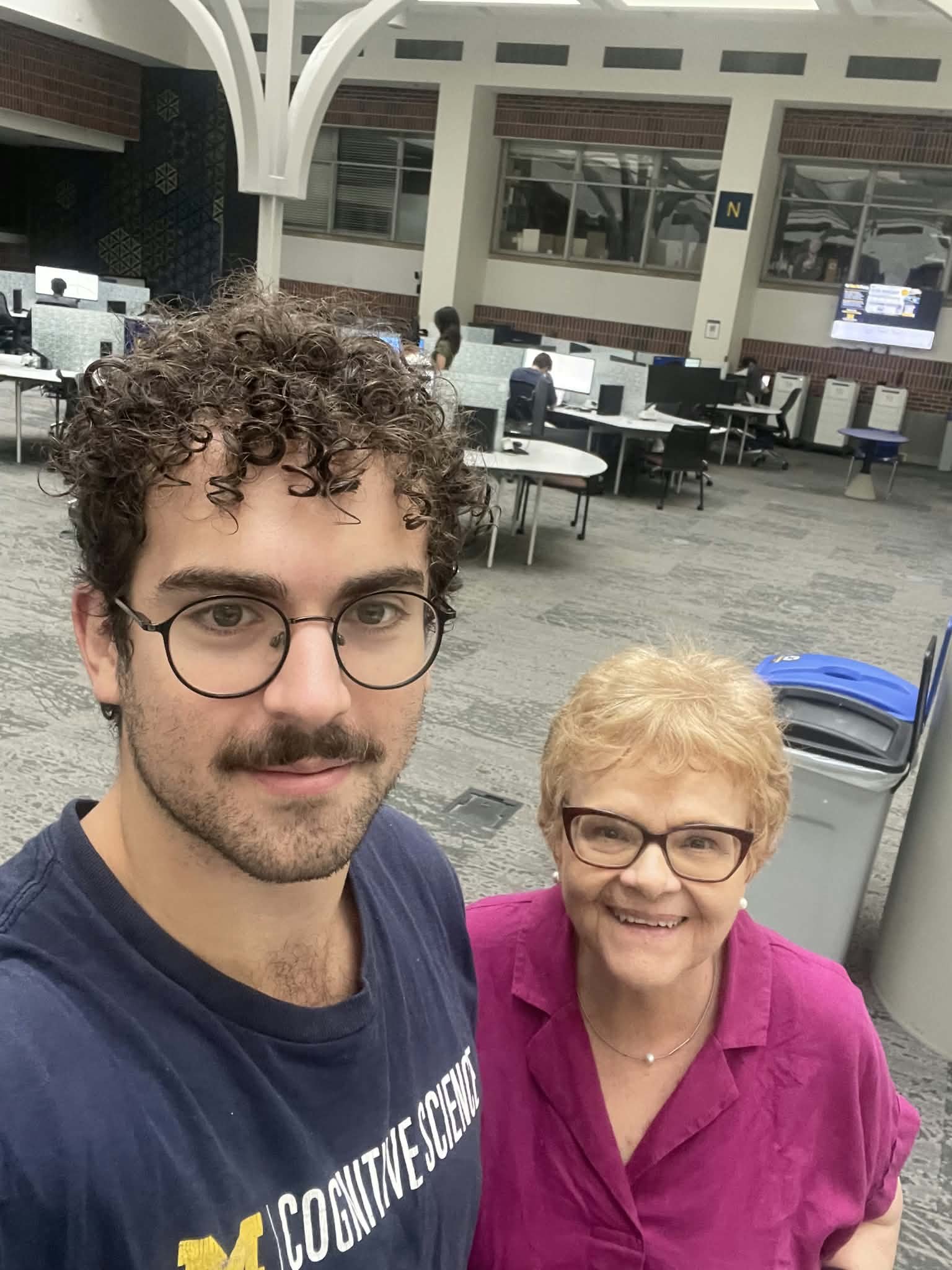
Here's what Dom did with my half-formed idea.
First, he dug into Cattell's theory and came back with a few cautions about where people lean on it too hard. For a five-minute talk, we agreed we were on solid ground.
Next came the examples. Dom searched more sources than I knew existed, with sharper keywords than I'd have thought to use. Then we vetted the candidates together. Airbnb rose to the top. Then Oracle, whose co-CEOs come from different generations and complement each other's strengths. Then Ariel Investments, where Mellody Hobson started as an intern and became co-CEO alongside founder John Rogers.
Then he asked, "How many slides?"
Twenty, I said, and they have to tell a story: two leaders beat one, how we think, what it looks like in action, and a close. He laid it out for Claude, and within minutes we had a first draft.
By the time we landed, I had the bones of my talk. It was clean. It was mine. And it left room for me to grow into it.
Dom was the light. I couldn't have moved at his speed. But I knew the audience and what the story needed to mean to them. That's crystal.
What we made together, somewhere between San Francisco and Detroit, was fire.

Find your fire
Think of one problem you're stuck on.
Name someone at least 15 years older or younger than you who sees things differently.
Spend 15 minutes on it together. You don't have to solve it. Just look at it together.
Notice what showed up that you wouldn't have seen alone.
That's the fire.
One more thing about Dom
The speed was impressive. What stayed with me was how easily he connects with people, all kinds of people, and how curious he is about them. That's why I think he'll do well on whichever path he takes. And as the elder of the pair, I couldn't help thinking: Your mother must be very proud of you.
Thank you, Dom.
Next time: what I heard from the other speakers, and how generations showed up in almost every talk.